
In the world of 3D printing, having the right laptop is like having a magic wand. It can turn your wildest ideas into tangible creations faster than you can say “extruder.” But with so many options out there, finding the best laptop for 3D printing can feel like searching for a needle in a haystack—if that needle was also a high-performance machine capable of handling complex designs.
Overview of 3D Printing Requirements
Choosing a suitable laptop for 3D printing significantly impacts design quality and print efficiency. A machine that meets specific criteria ensures smooth workflow and optimal performance.
Importance of a Good Laptop
A capable laptop enhances the 3D printing experience. It supports advanced software and complex designs without lagging. A high-performance model minimizes rendering times and maximizes productivity. Users can explore intricate projects with confidence, knowing their laptop handles demanding tasks seamlessly. Reliability in performance becomes crucial when tackling time-sensitive projects.
Key Specifications to Consider
Several specifications play a vital role in selecting a laptop for 3D printing. First, a powerful processor improves the capability to process designs quickly. Next, sufficient RAM, preferably 16GB or more, allows multitasking and running heavy applications. Graphics cards contribute significantly to rendering models accurately and efficiently. Lastly, ample storage, like SSD options with at least 512GB, ensures fast access to files and software. Prioritizing these specifications aids in achieving optimal 3D printing results.
Top Laptops for 3D Printing
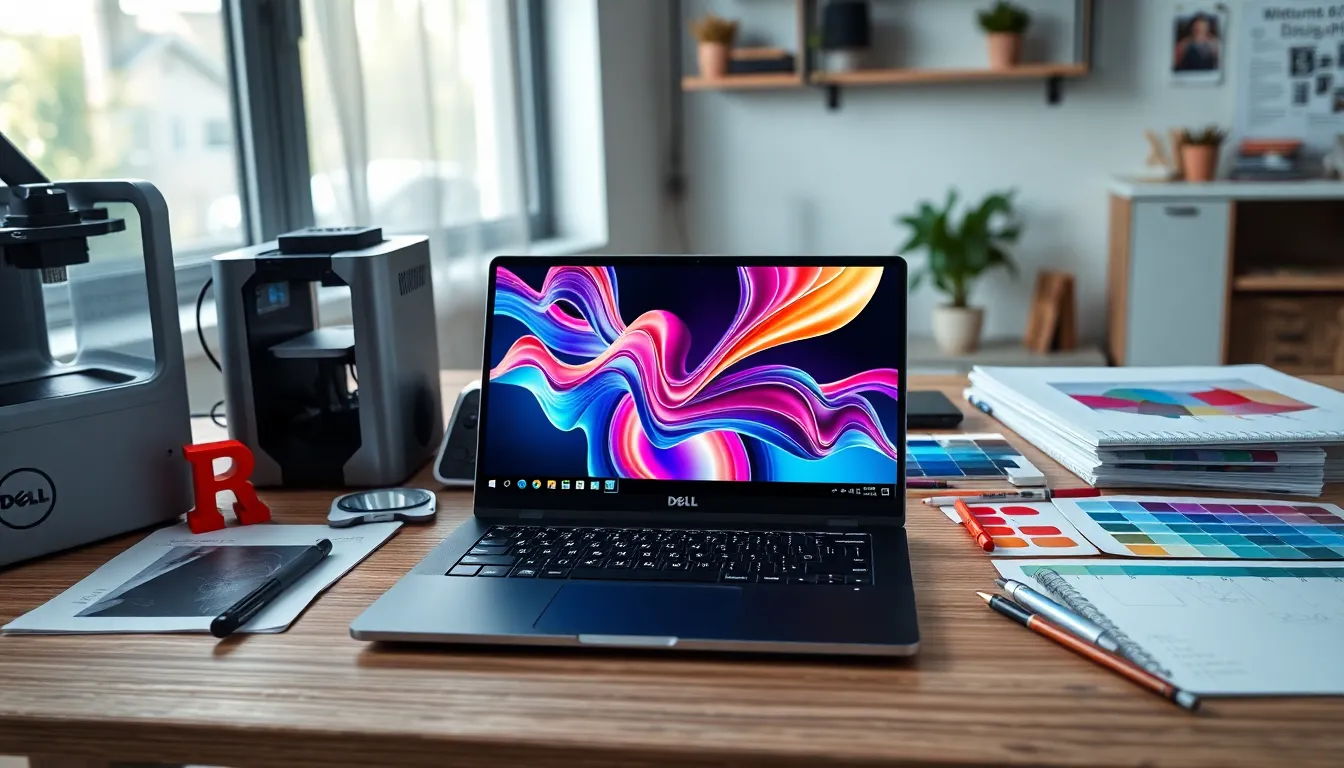
Finding the right laptop for 3D printing involves considering various performance aspects. The following laptops excel in features that support optimal printing results.
Laptop 1: Features and Performance
The Dell XPS 15 stands out with its Intel Core i7 processor and NVIDIA GeForce GTX 1650 graphics card. This combination enhances performance in complex rendering tasks. It offers 16GB RAM, which allows for smooth multitasking when using design software. A 512GB SSD ensures quick access to files, improving workflow efficiency. This model’s 15.6-inch display provides vivid colors, essential for precise design work.
Laptop 2: Features and Performance
The ASUS ROG Zephyrus G14 impresses with its AMD Ryzen 9 CPU and NVIDIA GeForce RTX 3060 GPU. Exceptional performance makes it an ideal choice for demanding 3D modeling applications. It includes 32GB RAM, providing ample capacity for heavy workloads. Equipped with a 1TB SSD, it offers significant storage for software and projects. The 14-inch display delivers vibrant visuals, helping accurately assess design details.
Laptop 3: Features and Performance
The Apple MacBook Pro 16 showcases impressive capabilities with its Apple M1 Pro chip. This chip offers superior performance for graphic-intensive applications, making it a favorite among designers. With 16GB RAM, it easily handles multitasking and large files. Its 512GB SSD guarantees fast loading times and efficient file management. The Retina display further enhances design accuracy with its stunning resolution and color fidelity.
Budget Options for 3D Printing
Selecting a budget-friendly laptop for 3D printing doesn’t mean sacrificing quality. Several models offer essential features for effective 3D design without hefty price tags.
Affordable Choices
Acer Aspire 5 stands out with its AMD Ryzen 5 processor, 8GB RAM, and 512GB SSD. This configuration handles basic 3D modeling software efficiently. Lenovo IdeaPad 3 is another solid option, featuring an AMD Ryzen 5 5500U, 16GB RAM, and 512GB SSD, providing a good balance between performance and price. HP Pavilion x360, with its Intel Core i3, 8GB RAM, and 256GB SSD, offers versatility in a 2-in-1 design, making it suitable for students and hobbyists.
Value for Money
ASUS VivoBook 15 offers excellent performance for the price, featuring an Intel Core i5, 16GB RAM, and 512GB SSD, all while remaining budget-friendly. Dell Inspiron 15 3000 series provides an Intel Core i5 processor and 8GB RAM with a 256GB SSD, striking a balance between performance and cost, ideal for beginners. Additionally, the MSI Modern 14, equipped with an Intel Core i5, 8GB RAM, and 512GB SSD, caters to creative individuals looking for both power and portability.
High-End Laptops for Professionals
High-end laptops cater to professional 3D printing needs with robust performance and advanced features. These machines streamline complex tasks, ensuring precise results.
Premium Features
High-end laptops typically boast powerful processors like Intel Core i7 or AMD Ryzen 9. Sufficient RAM, usually 16GB or more, supports multitasking effectively. A strong graphics card such as NVIDIA GeForce GTX 1650 or RTX 3060 enhances rendering accuracy. Large storage options, often 512GB SSD or more, provide quick access to files. Display quality matters, too. Retina displays or high-resolution screens promote design clarity, essential for intricate projects.
Why They Stand Out
These laptops excel in handling demanding software and large files. They minimize lag during modeling and rendering, significantly boosting productivity. Professionals appreciate their build quality and reliability, perfect for long editing sessions. Each model, like the Dell XPS 15 and Apple MacBook Pro 16, offers unique capabilities. Such machines cater specifically to graphic-intensive tasks, making them indispensable for serious 3D printing pros.
Selecting the right laptop for 3D printing is crucial for achieving high-quality results and an efficient workflow. With options ranging from high-performance machines to budget-friendly alternatives, there’s a suitable choice for every user. A laptop’s specifications can significantly influence the 3D printing experience, impacting design capabilities and print efficiency. Investing in a powerful processor ample RAM and a strong graphics card ensures smooth operation with complex designs. Whether for professional use or personal projects the right laptop transforms creative ideas into tangible results, enhancing overall productivity and satisfaction in the 3D printing journey.