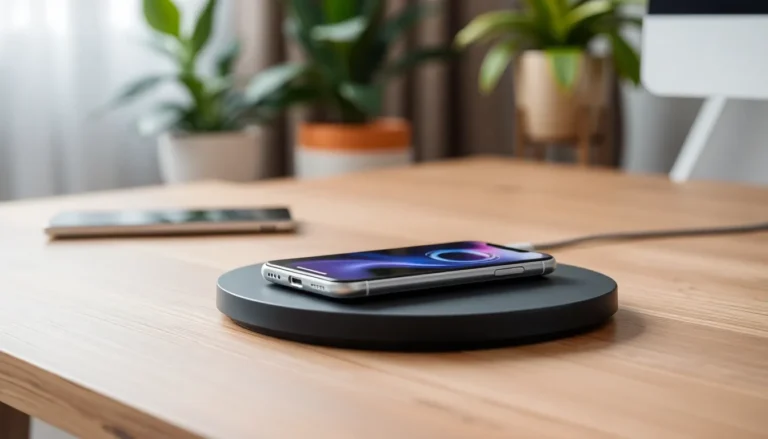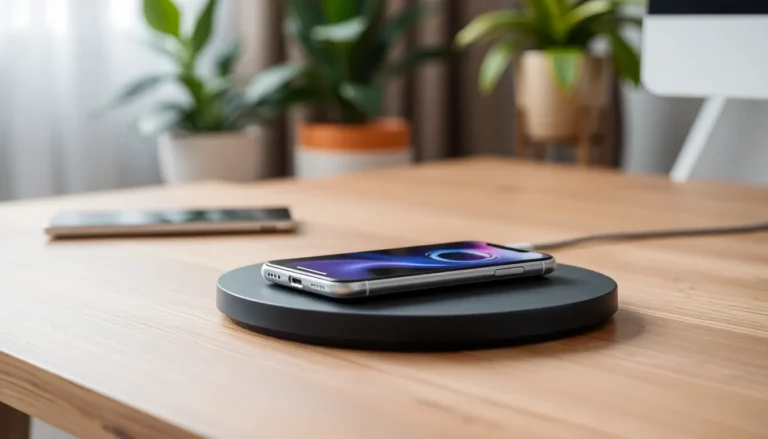

In a world where phone batteries seem to drain faster than a toddler’s energy at a birthday party, charging pads have swooped in like superheroes. These sleek gadgets not only eliminate the hassle of tangled cords but also add a touch of modern flair to any desk or nightstand. Imagine simply plopping your phone down and watching it charge, like magic—no more wrestling with cables while trying to balance your morning coffee!
Overview of Charging Pads
Charging pads offer a sleek solution for powering devices. Users simply place their smartphones or compatible gadgets on the surface, initiating the charging process. Convenience stands out as one of the major advantages, as there are no messy cords involved.
Wireless charging technology underpins the functionality of these devices. This tech utilizes electromagnetic fields to transfer energy. Various standards exist in the market, including Qi and PMA, with Qi being the most widely adopted.
Compatibility varies among devices. Many modern smartphones support wireless charging, but checking for compatibility is essential. An effective charging pad typically ranges from 5W to 15W in output power, impacting charging speed.
Designs also play a significant role in choosing a charging pad. Many options blend seamlessly with contemporary decor, enhancing aesthetics while serving a practical function. Some pads feature non-slip surfaces or cooling mechanisms to prevent overheating during use.
Portability emerges as another key benefit. Users can easily carry compact charging pads on the go, whether at work or while traveling. Multiple devices often charge simultaneously with pads designed to accommodate more than one smartphone or gadget.
Cost can influence decisions as well. Budget-friendly options exist alongside premium models featuring advanced technology or unique designs. Overall, charging pads represent a convenient charging solution that enhances lifestyle and productivity.
Types of Charging Pads
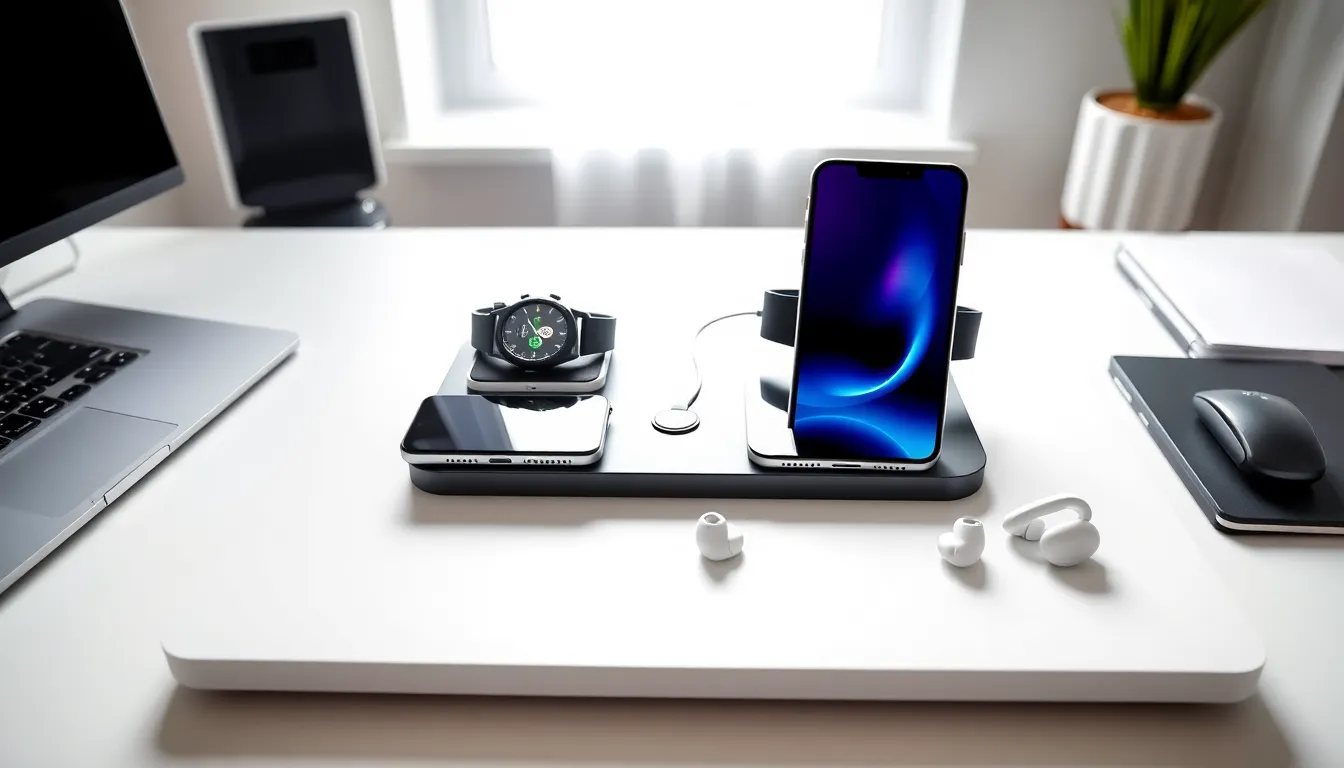
Charging pads come in various types, catering to different user needs. Each type provides unique features to enhance the charging experience.
Wireless Charging Pads
Wireless charging pads use electromagnetic fields to transfer energy. These pads support devices that comply with the Qi standard, the most widely used in the market. Users appreciate the convenience, as placing a compatible device on the pad begins charging without needing cords. Many designs offer minimalistic aesthetics, allowing for integration into various settings. Efficiency plays a vital role in choosing these pads, as charging typically occurs at 5W, optimizing convenience for users.
Fast Charging Pads
Fast charging pads deliver higher output power, typically ranging from 10W to 15W. Such output significantly reduces the charging time for compatible devices, appealing to users with busy lifestyles. Many smartphones can utilize these pads, enabling quick power boosts when necessary. Enhanced heat management systems prevent overheating, ensuring safety during the rapid charging process. Users should always check compatibility with their specific devices to maximize benefits.
Multi-Device Charging Pads
Multi-device charging pads allow users to charge several devices simultaneously. These pads incorporate multiple charging zones, accommodating various electronics like smartphones, smartwatches, and wireless earbuds. Portability is a critical feature, making them ideal for users who travel frequently. Ease of use enhances functionality; simply place devices in designated areas for a fast charge. Users enjoy the auxiliary benefit of reduced cable clutter, contributing to a more organized workspace at home or in the office.
Key Features to Consider
Selecting the right charging pad requires careful consideration of several key features. Understanding these elements ensures the chosen device meets your charging needs effectively.
Compatibility
Device compatibility proves crucial when choosing a charging pad. Many modern smartphones support wireless charging, but not all pads accommodate every model. Checking the Qi certification for compatibility gives assurance that the charging pad will work with your device. Additionally, some pads offer universal compatibility, allowing them to charge various gadgets such as smartwatches and earbuds. Ensuring compatibility guarantees that users won’t encounter frustrating charging issues.
Design and Portability
Design and portability play significant roles in user experience. A sleek, minimalistic design enhances the aesthetics of any workspace or living area. Non-slip surfaces added to some pads prevent devices from sliding off during charging. Portability also matters; lightweight charging pads enable users to easily carry devices for use at home or on the go. Compact models fit into bags without difficulty, making them ideal for travel. Prioritizing design and portability adds convenience to daily charging routines.
Safety Features
Safety features should never be overlooked in charging pads. Overcurrent protection and temperature control mechanisms reduce risks of overheating and battery damage. Many devices include built-in safeguards that stop charging once power reaches full capacity, extending battery lifespan. Some pads also feature cooling technologies that maintain optimal operating temperatures during use. Focusing on safety ensures users can charge devices without concerns about potential hazards.
Advantages of Using Charging Pads
Charging pads offer several advantages that enhance user experience. Convenience ranks high on the list, allowing users to charge devices without dealing with tangled cords. Simplicity defines the process; just place the smartphone on the pad and charging begins instantly.
Compatibility with numerous devices simplifies the charging experience. Most modern smartphones support wireless charging technology, primarily through the Qi standard, which ensures seamless functionality with many gadgets.
Speed also plays a role, particularly in fast charging models, which provide higher output power ranging from 10W to 15W. This capability significantly cuts down charging time, making them more efficient for users with busy schedules.
Design contributes to their appeal as well. Sleek aesthetics blend effortlessly into various home or office settings, enhancing decor while offering utility. Non-slip surfaces in many models prevent devices from slipping off, ensuring safety during charging.
Portability enhances their practicality. Compact charging pads easily fit into bags for travel, enabling users to charge devices anytime, anywhere. Multi-device options allow charging several gadgets simultaneously, promoting organization and reducing clutter.
Safety features prove crucial in the charging pad landscape. Overcurrent protection and temperature control systems minimize the risk of overheating, ensuring batteries remain safe throughout the charging process.
Affordability adds to the allure. With budget-friendly and premium options widely available, users can select pads that align with their financial preferences while enjoying all the listed benefits.
Disadvantages of Charging Pads
Charging pads come with certain drawbacks that users must consider. One significant limitation involves charging speed, particularly with low-output models that often provide only 5W. Devices utilizing these slower pads might take considerably longer to reach full battery, impacting user convenience during critical times.
Another issue relates to heat generation. While many charging pads include safety features, some models can still become warm during use. Excessive heat might affect battery longevity or performance over time, raising concerns for users prioritizing long-term device health.
Positioning also plays a crucial role in the efficiency of charging pads. Misalignment can interrupt the charging process, resulting in users needing to adjust their devices frequently. This inconvenience undermines the core benefit of effortless charging, especially for those moving around during the day.
Compatibility limitations persist as a challenge as not all phone models support wireless charging. Users should always verify compatibility before purchasing, as relying solely on a charging pad can leave incompatible devices uncharged.
Furthermore, charging pads often necessitate a stable power source. In scenarios where outlets are limited or inconveniently located, users may find themselves unable to utilize their charging pads effectively.
Lastly, cost can be a significant factor. While budget-friendly options exist, premium models often command higher prices due to additional features. Users wanting the best experience must balance the desire for advanced capabilities with their budget constraints, which can complicate selection.
Charging pads represent a modern solution to the everyday challenge of keeping devices powered. Their sleek designs and ease of use enhance both convenience and aesthetics in any environment. With various types available users can find the perfect match for their needs whether it’s fast charging or multi-device capabilities.
While there are some limitations such as slower charging speeds and compatibility issues the benefits often outweigh these drawbacks. Safety features and portability make charging pads a practical choice for those on the go. As technology continues to evolve charging pads are likely to become an essential accessory for anyone looking to simplify their charging experience.