

In a world where cars are getting smarter and faster, it’s time to rev up the innovation engine with automotive 3D printing. Imagine a factory where the only limit is your imagination, not the assembly line. This technology isn’t just for hobbyists printing little toy cars; it’s reshaping how manufacturers design, prototype, and even produce entire vehicle parts.
Overview of Automotive 3D Printing
Automotive 3D printing reshapes vehicle manufacturing. It enhances creativity and streamlines production processes.
Definition and Concept
Automotive 3D printing refers to additive manufacturing technologies specifically applied to the automotive industry. This technology builds components layer by layer using materials like plastic, metal, and composites. Manufacturers utilize 3D printing for prototyping, tooling, and producing end-use parts. Benefits include reduced lead times, minimized waste, and customization options. Companies leverage this process to create complex geometries that traditional methods struggle to achieve. Efficiency and flexibility characterize the approach, allowing for rapid adjustments during design stages.
Historical Background
The roots of automotive 3D printing trace back to the 1980s when the first technologies emerged. Initially, manufacturers primarily employed these techniques for prototyping. This application laid the foundation for further exploration in the 1990s, as companies began to recognize the potential for production uses. Over the years, advancements in materials and processes have driven increased adoption. The 2010s marked significant milestones, including the introduction of metal additive manufacturing, which expanded capabilities. Today, automotive 3D printing continues to evolve, integrating with Industry 4.0 initiatives and enhancing production workflows.
Benefits of Automotive 3D Printing
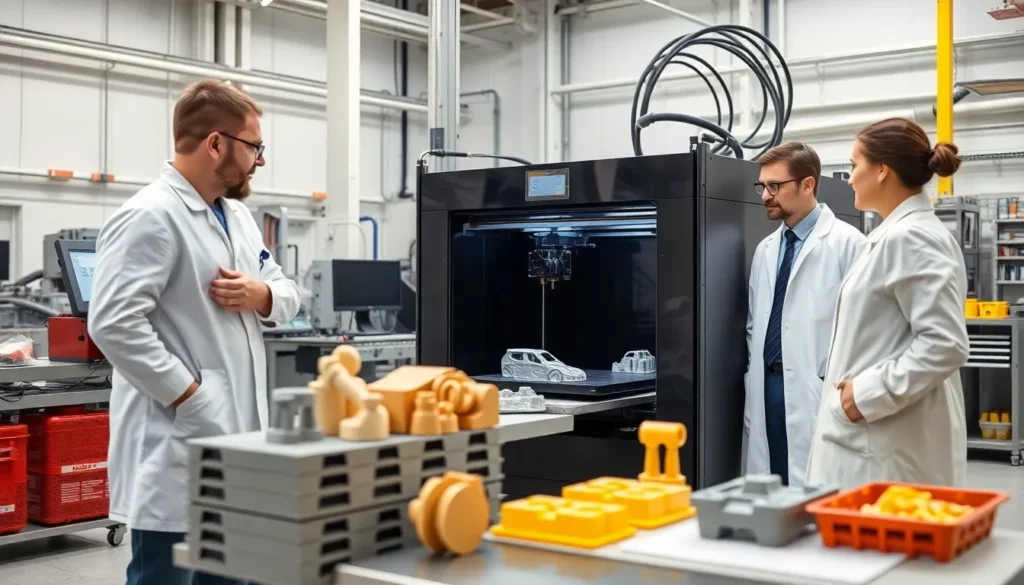
Automotive 3D printing offers various advantages that significantly enhance manufacturing processes. These benefits include cost reduction and time efficiency.
Cost Reduction
Cost savings represent a major benefit of automotive 3D printing. Traditional manufacturing often involves expensive molds and tooling, while 3D printing eliminates these costs by allowing direct production of parts. Materials usage decreases since additive manufacturing creates components layer by layer. This method also minimizes waste, as only necessary materials are used, generating less scrap during production. Companies can often optimize their supply chains, reducing expenses related to inventory management and material sourcing. Customization for specific needs can also lower costs, as manufacturers avoid large-scale production runs and associated expenses.
Time Efficiency
Time efficiency stands out as another critical benefit of automotive 3D printing. Fast prototyping speeds up the design process, allowing teams to test and iterate quickly. Accelerated design cycles lead to shorter development times and quicker market introductions. Components can be produced on-demand, eliminating long lead times associated with conventional methods. Manufacturers reduce the time spent awaiting parts and tools, maintaining a more agile production schedule. Enhanced flexibility also allows for rapid adaptation to changing designs or customer requirements, ensuring that companies stay competitive in a dynamic market.
Applications in the Automotive Industry
Automotive 3D printing plays a crucial role in various applications within the industry, enhancing design and production efficiency.
Prototyping and R&D
Prototyping benefits significantly from automotive 3D printing. Designers can rapidly create functional prototypes, enabling quick testing and iteration. This flexibility leads to faster validation of designs, reducing time spent in the research and development phase. Innovations emerge more frequently since teams can quickly adapt prototypes based on real-world feedback. Manufacturers now incorporate 3D printing into their R&D processes, leading to more creative solutions and performances that meet market demands.
Custom Parts and Components
Custom parts and components represent another vital application of automotive 3D printing. Manufacturers produce customized vehicle parts tailored to specific customer needs. This capability enhances personalization, allowing consumers to select unique features for their vehicles. Reduced lead times for production enable rapid responses to market trends and individual preferences. Furthermore, 3D printed components can often yield lightweight structures, improving overall vehicle efficiency. Customization trends continue to shape consumer expectations, making this approach increasingly relevant in today’s automotive landscape.
Challenges and Limitations
Automotive 3D printing faces several challenges and limitations that manufacturers must navigate to fully harness its potential.
Material Constraints
Material selection presents significant hurdles in automotive 3D printing. Limited options restrict the ability to produce parts with specific mechanical properties and durability. While plastics are widely used, their strength often falls short of traditional metals. Additionally, certain advanced composites, though superior, may raise costs significantly. The variety of materials available doesn’t always align with industry standards. For critical components, achieving the right balance between weight, strength, and cost remains a constant challenge.
Regulatory Issues
Regulatory compliance often complicates the adoption of 3D printing in the automotive sector. Standards set by organizations such as the International Organization for Standardization (ISO) and the Society of Automotive Engineers (SAE) impose strict guidelines on part manufacturing. Navigating these regulatory landscapes can slow down innovation. It’s essential for manufacturers to ensure that 3D printed components meet safety and performance regulations. Certification processes might also add time and expense, hindering the rapid scalability that 3D printing promises.
Future Trends in Automotive 3D Printing
Automotive 3D printing is quickly evolving, drawing attention in various sectors. Trends indicate significant transformations in the industry.
Technological Advancements
Innovations in materials enhance the functionality of 3D printed components. New metal alloys and improved polymers increase strength and heat resistance. Software developments streamline the design process, allowing for more complex geometries and features. Integration of artificial intelligence optimizes production techniques, reducing errors and speeding up cycles. Moreover, advancements in multi-material printing enable manufacturers to create intricate parts with diverse properties. These technological improvements position 3D printing as a vital asset in automotive design and manufacturing.
Industry Growth Projections
Growth projections for automotive 3D printing suggest substantial market expansion. The global market size reached approximately $1.5 billion in 2021 and is expected to grow at a compound annual growth rate of 20% through 2028. Increased demand for lightweight parts fuels investment in additive manufacturing. Major automotive companies recognize the advantages of 3D printing for rapid prototyping and on-demand production. Adoption of this technology is predicted to rise, enhancing agility and customization in market offerings. Industry stakeholders anticipate a shift towards fully integrated production systems that utilize 3D printing for efficiency and cost-effectiveness.
Automotive 3D printing is reshaping the landscape of the car manufacturing industry. Its ability to foster innovation and customization is driving manufacturers to rethink traditional production methods. With advancements in materials and technology, the future looks promising for this sector.
As companies increasingly adopt 3D printing, they can expect significant cost savings and enhanced efficiency. This shift not only streamlines production but also allows for rapid responses to market demands. The potential for personalized vehicle components further underscores the importance of this technology in meeting consumer preferences.
While challenges remain, including material limitations and regulatory hurdles, the ongoing evolution of automotive 3D printing is set to transform how vehicles are designed and produced. The journey ahead promises exciting developments that will continue to push the boundaries of automotive engineering.