

In a world where everything seems to be going digital, 3D printing companies are turning the impossible into reality—quite literally! From creating custom prosthetics to building entire homes layer by layer, these innovators are reshaping industries and, yes, even your investment portfolio. If you’ve ever dreamed of watching your money grow while marveling at a printer that can make a pizza or a car, you’re in the right place.
Overview Of 3D Printing Companies
3D printing companies play a crucial role in advancing manufacturing and product development. Leaders in this sector, such as Stratasys and 3D Systems, specialize in diverse applications, from aerospace to healthcare. These firms consistently innovate, driving efficiencies and enabling customization at unprecedented levels.
Investment opportunities within this realm are continually evolving as the technology matures. The global market for 3D printing reached approximately $12.6 billion in 2021 and is projected to expand to $37.2 billion by 2026. Many investors eye public companies, seeking potential growth based on performance and market demand.
Market dynamics influence stock prices significantly, affecting companies like Materialise and Proto Labs. Analysts often assess the competitive landscape, exploring the emerging trends in materials and technologies that impact profitability. Public sentiment toward sustainability also shapes strategies, aligning with consumer preferences for environmentally friendly manufacturing solutions.
Several public companies report strong financials, showcasing the potential for high returns. Enhanced production methods allow firms to reduce costs while improving product quality. Market research indicates that sectors like automotive and healthcare are the primary drivers of growth in this industry.
The success of 3D printing companies often hinges on partnerships and collaborations. Firms engage with technology providers, universities, and research institutions to stay ahead. Such relationships foster the development of innovative solutions that capture new markets and enhance capabilities.
Investors who understand the nuances of this sector can identify promising opportunities. With the potential for transformative impacts across numerous industries, 3D printing companies represent a significant focal point in contemporary market discussions.
Major Players In The Market
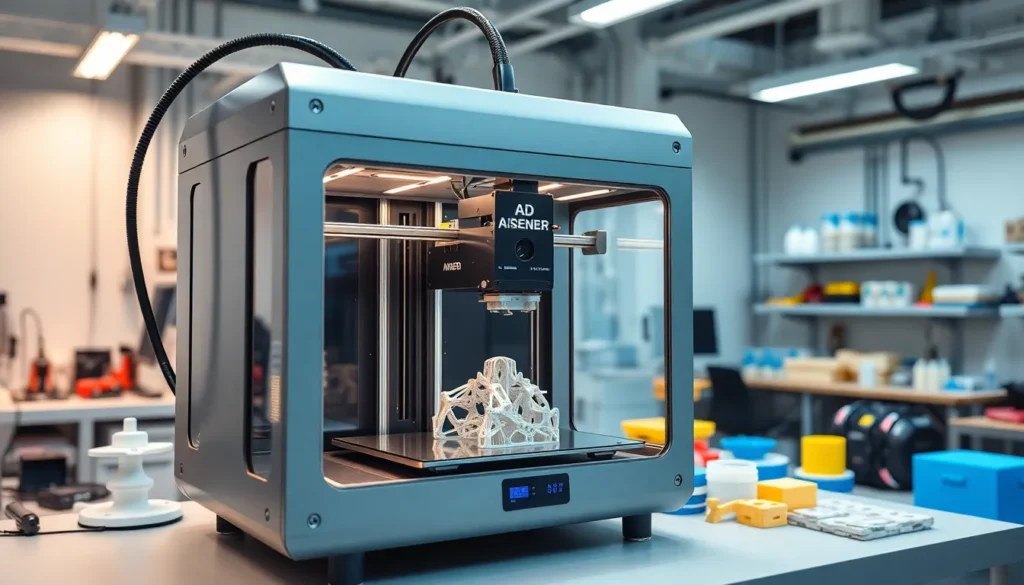
The 3D printing sector features several key players that significantly impact their respective markets. Each company presents unique financial performance metrics that investors closely watch.
Company A: Financial Performance
Stratasys reported a revenue of $1.1 billion in 2022, marking a 5% increase from the previous year. The strong performance stems from its expanding portfolio in additive manufacturing and strategic partnerships in aerospace applications. Analysts highlight the company’s focus on sustainable practices, which enhances its market appeal. Stock performance reflects confidence, trading at approximately $24 per share, a notable gain influenced by its innovation track record.
Company B: Financial Performance
3D Systems generated $600 million in revenue for 2022, showing a robust recovery from earlier challenges. Its diverse offerings, including healthcare and manufacturing solutions, drive consistent cash flow. Investors note the company’s focus on R&D, aiming to revolutionize product integration. Trading at around $10 per share, the stock has attracted attention for its potential upside based on improving fundamentals and market demand.
Company C: Financial Performance
Materialise reported an impressive revenue of €250 million (approximately $290 million) in 2022, representing a 15% year-on-year growth. The company emphasizes its strong position in the medical sector, providing software solutions for 3D printing applications. Key partnerships with hospitals and universities support its ongoing innovation efforts. Shares trade at €27, reflecting heightened investor interest due to its proven profitability and market expansion strategies.
Market Trends Influencing 3D Printing Stocks
Investors track several key trends affecting 3D printing stocks. The growth in applications across industries significantly impacts demand for 3D printing solutions. As the global market is projected to increase from $12.6 billion in 2021 to $37.2 billion by 2026, companies like Stratasys and 3D Systems stand to benefit.
Sustainability matters to both consumers and investors. Many 3D printing firms are implementing eco-friendly practices, which resonate with environmentally conscious buyers. Such efforts often enhance brand reputation, attracting new partnerships and investment opportunities.
Technological advancements within the sector create additional momentum. Innovations in materials, such as bio-based polymers and metals, expand the range of applications, especially in healthcare and aerospace. Analysts closely monitor these developments, as they influence the competitive landscape and profitability.
Financial performance among 3D printing companies showcases their growth potential. Stratasys reported $1.1 billion in revenue for 2022, while 3D Systems generated $600 million. Materialise recorded €250 million (approximately $290 million), indicating diverse revenue streams and strong market positioning.
Furthermore, research partnerships amplify innovation. Collaborations with universities and technology providers lead to breakthroughs that enhance product offerings. This synergy often proves essential for companies aiming to stay ahead in a rapidly evolving industry.
Market dynamics also play a crucial role. Stock prices of companies like Materialise and Proto Labs fluctuate based on investor sentiment and technological trends. Strong performance in sectors like automotive and healthcare demonstrates the sector’s resilience and growth potential.
Investors who understand these trends can spot attractive opportunities. With the ongoing transformation within the industry, 3D printing companies represent a compelling area for future investments.
Investment Strategies For 3D Printing Companies
Investing in 3D printing companies requires a strategic approach due to the rapidly evolving market. Identifying well-performing firms like Stratasys and 3D Systems provides an initial advantage, as these companies are prominent players with strong revenue growth. Analysts frequently monitor their financial performance, noting Stratasys’ $1.1 billion revenue in 2022 and 3D Systems’ $600 million, both highlighting solid market positions.
Focusing on high-growth sectors like healthcare and automotive enhances investment potential. Companies in these sectors leverage 3D printing technologies for innovation, often driving significant profits. Portfolio diversification also plays a crucial role. Investors should consider multiple firms within the 3D printing market to reduce risk while maximizing returns.
Understanding technological advancements informs investment decisions. Emerging materials and sustainable practices often improve a company’s profitability. For instance, Materialise boasts a 15% revenue increase driven by its focus on medical applications.
Examining partnerships provides insight into future performance. Collaborations with universities and tech firms often signal potential for groundbreaking developments. Firms that emphasize research and innovation are likely to capture market share effectively.
Being attuned to market dynamics aids investors in making informed choices. Trends such as increasing applications across diverse industries indicate robust demand for 3D printing solutions. Sustainability efforts resonate with consumers and can enhance corporate reputation, impacting stock performance positively.
Monitoring overall market growth can also assist investment strategies. The 3D printing market, estimated to grow from $12.6 billion in 2021 to $37.2 billion by 2026, presents compelling opportunities. By embracing these strategies, investors can position themselves strategically in this dynamic industry.
Risks Associated With 3D Printing Stocks
Investors should consider various risks linked to 3D printing stocks before committing funds. Market volatility can significantly affect stock prices of companies in the sector. Companies like Stratasys and 3D Systems, despite their growth, may experience price fluctuations due to changing consumer demand and competitive pressures.
Regulatory hurdles may also pose challenges for businesses. Restrictions on materials and production techniques can impact profit margins. Compliance with evolving regulations can divert resources away from innovation and growth.
Technological advancements, while beneficial, come with risks as well. Rapid changes in technology may render certain processes or products obsolete. Investors must keep an eye on emerging trends to assess which companies maintain relevance in the market.
Financial performance variability exists among major players. For instance, Stratasys’s reported revenue growth can shift based on market conditions, affecting investor confidence. Lesser-known companies may not have the same financial stability, increasing risk factors.
Partnerships, while promising, can also present challenges. Collaborations with technology providers and research institutions can yield high rewards, but they can fail to deliver expected results. The dynamics of these partnerships often dictate a company’s market position and overall viability.
Lastly, the sustainability of business practices remains a critical area of concern. Evolving consumer preferences for eco-friendly products may pressure companies to adapt quickly. Failure to address these expectations can lead to reputational damage and declining sales.
Being aware of these risks is vital for anyone looking to invest in the thriving 3D printing industry. Understanding the dynamics at play enables smart investment decisions and strategic positioning in an ever-evolving market landscape.
The 3D printing industry stands at the forefront of innovation and investment potential. With companies like Stratasys and 3D Systems leading the charge, the market’s growth trajectory offers numerous opportunities for savvy investors. Understanding the nuances of this dynamic sector is crucial for making informed decisions.
While the promise of high returns is enticing, it’s essential to stay aware of the associated risks. Market volatility and changing consumer demands can impact stock performance. By keeping an eye on emerging trends and maintaining a diversified portfolio, investors can navigate this evolving landscape effectively. The future of 3D printing holds great promise, making it a compelling area for investment exploration.