
In a world where 3D printing dreams can quickly turn into nightmares due to sky-high tech prices, finding a budget laptop that can keep up feels like searching for a unicorn. But fear not! The quest for an affordable laptop that won’t leave your wallet gasping for air is on.
What To Look For In A Budget Laptop For 3D Printing
Selecting the right budget laptop for 3D printing involves understanding essential performance and graphics requirements. Focus on specific features to ensure optimal results.
Performance Requirements
Performance serves as a critical factor. A laptop with at least an Intel i5 or AMD Ryzen 5 processor handles 3D modeling and printing tasks efficiently. Memory plays an equally vital role. Aim for 8GB of RAM to accommodate larger files and applications. Storage impacts speed and access times, so consider a laptop that includes a solid-state drive (SSD) for faster performance. A minimum of 256GB SSD is recommended for balancing storage and efficiency. Battery life matters too, particularly for on-the-go users; look for laptops with at least 5 hours of battery performance for sustained usage.
Graphics Considerations
Graphics capabilities are vital for rendering detailed 3D models. Integrated graphics can suffice for simple tasks, but a dedicated GPU enhances performance significantly. Look for laptops featuring NVIDIA GeForce GTX or AMD Radeon graphics for better rendering capabilities. Screen resolution directly affects clarity, so a display with at least 1920 x 1080 resolution provides a sharper visual experience. Additionally, choose a laptop with good color accuracy to ensure that designs appear as intended. Effective thermal management helps maintain performance during extensive usage, so prioritize models known for optimal cooling systems.
Top Budget Laptops For 3D Printing
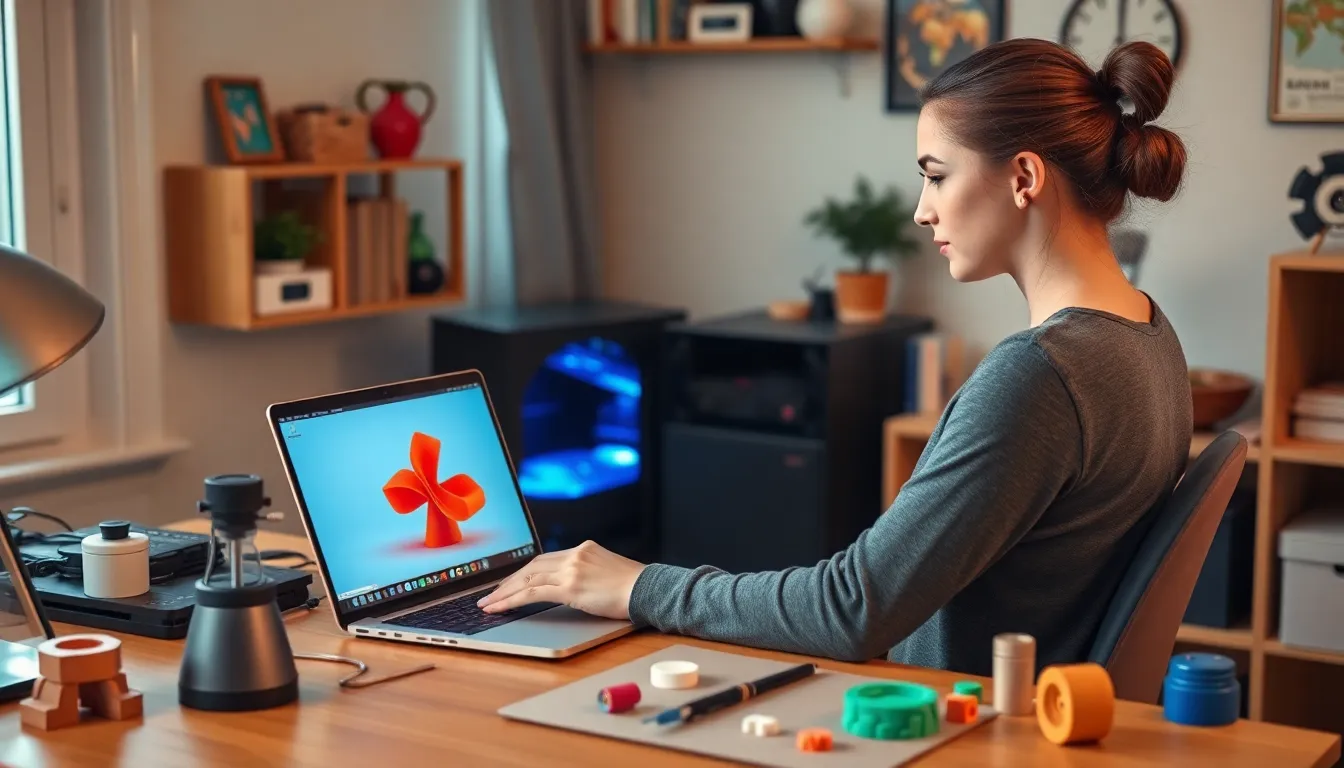
Finding the right budget laptop for 3D printing can simplify complex tasks while being cost-effective. Here are some top contenders with specifications that meet essential performance criteria.
Laptop 1: Overview and Specifications
The Acer Aspire 5 offers a solid blend of performance and affordability. It comes equipped with an Intel i5 processor, 8GB of RAM, and a 256GB SSD. This configuration allows for efficient multitasking and fast loading times. Featuring a 15.6-inch 1920 x 1080 display, the visuals remain crisp and clear during design work. Its dedicated NVIDIA GeForce MX250 graphics card enhances rendering capabilities, making it suitable for moderate 3D printing tasks. Battery life extends to approximately 7 hours, providing ample time for projects on the go.
Laptop 2: Overview and Specifications
The Lenovo IdeaPad 3 provides excellent value for 3D printing endeavors. It includes an AMD Ryzen 5 processor paired with 8GB of RAM and a spacious 512GB SSD. This setup ensures quick data access and efficient performance. Users appreciate its 15.6-inch display, which offers a resolution of 1920 x 1080 for enhanced detail and accuracy. Additionally, integrated AMD Radeon graphics support basic 3D applications successfully. The battery lasts around 6 hours, ideal for extended use in various settings.
Laptop 3: Overview and Specifications
The HP Pavilion 15 stands out with its affordability and specs tailored for 3D printing. Featuring an Intel i5 CPU, it boasts 12GB of RAM and a 256GB SSD, providing ample power for demanding tasks. The 15.6-inch full HD display ensures high-quality visuals for precise designs. Equipped with Intel UHD Graphics, this laptop can handle moderate 3D applications effectively. Battery life rates at about 8 hours, allowing flexibility for users who prefer working away from outlets.
Comparing Price and Performance
Price and performance can significantly impact the selection of a budget laptop for 3D printing. Identifying a laptop that delivers adequate power without excessive cost proves important for many users. Laptops like the Acer Aspire 5, priced around $600, exemplify a strong balance between affordability and performance, featuring an Intel i5 processor and a dedicated NVIDIA GeForce MX250 graphics card.
Performance requirements warrant attention. An Intel i5 or AMD Ryzen 5 processor serves as a baseline for handling 3D printing software effectively. Users will notice that laptops equipped with a minimum of 8GB of RAM enhance multitasking capabilities, while a solid-state drive (SSD) with at least 256GB ensures efficient storage and quick boot times. The HP Pavilion 15 fits this mold well, offering an Intel i5 CPU, 12GB of RAM, and around 8 hours of battery life, all for a competitive price.
Graphics performance plays a crucial role, particularly for tasks involving complex models. Integrated graphics may be sufficient for basic tasks, but investing in a dedicated GPU, such as an NVIDIA GeForce GTX or AMD Radeon, notably improves rendering and processing speeds. The Lenovo IdeaPad 3, with its AMD Ryzen 5 processor and integrated graphics, strikes a balance in performance for users who prioritize budget.
Resolution also influences the overall experience. Individuals seeking clarity and good color accuracy should prioritize a display resolution of at least 1920 x 1080. This specification enhances the precision needed for 3D modeling and design tasks. Ultimately, choosing a laptop that combines price with reliable performance ensures a smoother experience for 3D printing tasks and creative pursuits.
User Experience and Reviews
Users report positive experiences with budget laptops suitable for 3D printing, particularly appreciating their cost-effectiveness. Reviews of the Acer Aspire 5 highlight its powerful Intel i5 processor and dedicated NVIDIA GeForce MX250 graphics, which enhance rendering capabilities during 3D modeling tasks. Battery life often impresses, with users enjoying approximately 7 hours of uninterrupted work.
The Lenovo IdeaPad 3 receives recognition for its AMD Ryzen 5 processor and 512GB SSD, offering ample storage for larger files. Users mention that its integrated AMD Radeon graphics meet basic needs, making it a practical choice for those on a tight budget. Performance during everyday tasks remains smooth, ensuring satisfaction among users engaged in 3D printing.
Many reviews praise the HP Pavilion 15 for its Intel i5 CPU and 12GB of RAM, recognizing its robust specifications at a competitive price. Users frequently note its excellent battery life of around 8 hours, allowing for extended use without frequent recharging. Clarity and color accuracy of the display garner positive remarks, enhancing the overall creative experience.
Users frequently emphasize the importance of solid thermal management for laptops in this category. Effective cooling systems maintain performance during extensive use, preventing throttling and ensuring consistent results. Overall, the combination of performance, graphics capabilities, and user satisfaction makes these budget laptops a viable option for 3D printing tasks.
Finding a budget laptop for 3D printing doesn’t have to be a daunting task. With the right specifications in mind users can discover cost-effective options that meet their needs. The Acer Aspire 5 Lenovo IdeaPad 3 and HP Pavilion 15 stand out as excellent choices offering a blend of performance and affordability.
By prioritizing essential features like a capable processor sufficient RAM and a solid-state drive users can ensure a smooth 3D printing experience. These laptops not only deliver on performance but also receive positive feedback from users who appreciate their reliability and value. Investing in one of these models can empower users to explore their creative pursuits without overspending.