

In the world of 3D printing, having the right laptop can make all the difference between printing a masterpiece and a melted plastic blob that resembles a sad pancake. Whether you’re a hobbyist or a professional, your laptop needs to handle complex designs, powerful software, and the occasional existential crisis when your print fails.
Imagine effortlessly bringing your wildest creations to life, all while your laptop hums along like a well-oiled machine. With the right specs, you’ll breeze through slicing software and modeling programs without breaking a sweat. Ready to level up your 3D printing game? Let’s dive into what makes a laptop the perfect partner in your creative adventures.
Overview of Laptops for 3D Printing
Selecting the right laptop is essential for optimal 3D printing results. The right device ensures seamless performance and enhances the overall user experience.
Importance of Choosing the Right Laptop
Choosing the appropriate laptop impacts the quality of 3D printed designs. Users encounter fewer issues with complex models when equipped with higher specifications. A powerful laptop effectively handles demanding software like CAD and slicing programs. Failing to invest in a capable laptop may result in sluggish processing and longer rendering times. Enthusiasts and professionals alike benefit from laptops with superior graphics processing units (GPUs) and faster processors. Ultimately, selecting a versatile laptop supports creative endeavors in 3D printing.
Key Specifications to Consider
Several specifications significantly influence laptop performance for 3D printing tasks. Graphics cards determine rendering speed and visual quality of designs. Processors, particularly multicore options, enhance the handling of complex calculations. RAM capacity, ideally 16 GB or more, improves multitasking capabilities while running multiple programs. Storage type also plays an important role; solid-state drives (SSDs) offer faster loading times compared to traditional hard drives. Display quality, including a high resolution and good color accuracy, further aids in precise design work. Choosing a laptop with these features optimizes the 3D printing experience.
Top Laptops for 3D Printing in 2023
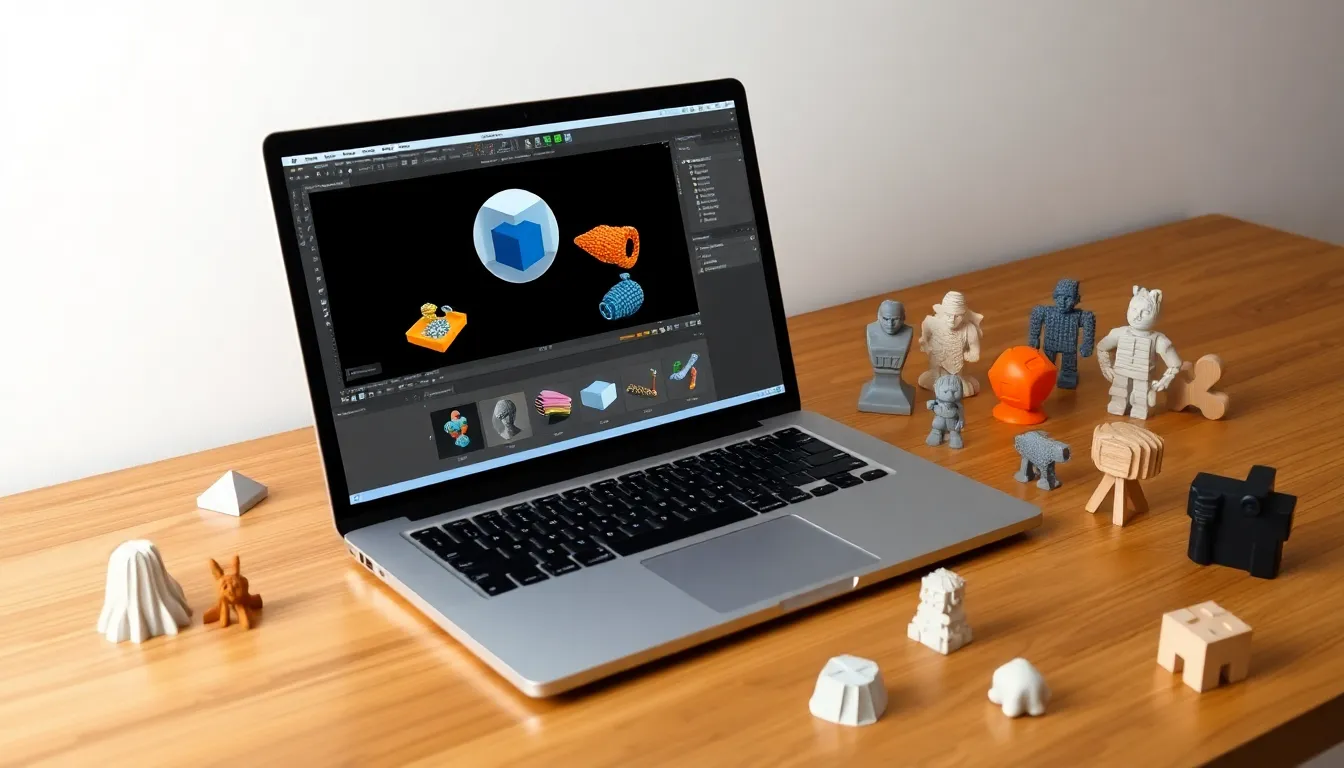
Finding the right laptop for 3D printing ensures users can manipulate complex designs and operate demanding software efficiently. Several options fit various budgets and performance needs.
Budget-Friendly Options
Affordable laptops can still deliver essential features for 3D printing. Models like the Acer Aspire 5 offer AMD Ryzen 5 processors and NVIDIA GeForce MX250 graphics, providing adequate power for basic CAD software. The Lenovo IdeaPad 3, with its Intel Core i5 and 8 GB RAM, simplifies multitasking without breaking the bank. Additionally, both options come with SSDs, ensuring quick loading times for slicing programs. These budget-friendly picks cater to hobbyists and those new to 3D printing.
High-Performance Choices
High-performance laptops excel in handling advanced 3D printing tasks. The ASUS ROG Zephyrus G14 boasts AMD Ryzen 9, NVIDIA GeForce RTX 3060, and 16 GB RAM, delivering swift processing for complex projects. Another excellent choice, the Dell XPS 15, combines Intel Core i7 with RTX 3050 Ti graphics for superior rendering capabilities. Both laptops feature high-resolution displays with vibrant color accuracy, enhancing design precision. These options accommodate seasoned professionals who require powerful machines for intricate work.
Features to Look For
Selecting a laptop for 3D printing requires attention to several key features. Focusing on graphics card, processor, and RAM can ensure optimal performance.
Graphics Card Requirements
A dedicated graphics card is essential for rendering 3D models efficiently. Look for GPUs that support OpenGL and DirectX, which allow for smooth visual performance and real-time rendering. Ideal options include NVIDIA GeForce RTX and AMD Radeon RX, known for their powerful graphics capabilities. These cards can accelerate computations needed for complex designs, reducing rendering times significantly. Choosing a laptop with at least 4 GB of dedicated VRAM provides better handling of high-resolution models, ensuring clarity during design work.
Processor and RAM Specifications
Multi-core processors play a crucial role in handling demanding software used in 3D printing. Opt for laptops equipped with Intel i7 or AMD Ryzen 7 processors, as they excel in multitasking and processing speed. A minimum of 16 GB RAM is recommended for seamless operation with CAD and slicing software. Increased RAM allows for efficient multitasking, enabling concurrent operations without lag. For more intensive tasks, considering 32 GB might enhance performance, particularly when working on larger projects or using resource-heavy applications.
Additional Considerations
Choosing the right laptop for 3D printing involves evaluating various factors to ensure optimal performance.
Software Compatibility
Software compatibility plays a crucial role in the 3D printing experience. Target specific programs often used for modeling and slicing, such as Autodesk Fusion 360, Cura, or SolidWorks. Ensure the laptop runs on compatible operating systems, primarily Windows or macOS. Strongly consider systems with driver support for 3D software, particularly for dedicated graphics cards, including NVIDIA GeForce and AMD Radeon. Running multiple applications simultaneously necessitates a laptop with sufficient RAM and processing power. Overall, having reliable software compatibility enhances workflow and maximizes efficiency in 3D design.
Portability and Battery Life
Portability and battery life significantly impact the usability of a laptop for 3D printing. Lightweight models enable easy transportation, making them ideal for creators who work on the go. Seek laptops that weigh under 5 pounds for maximum portability. Additionally, strong battery life allows for uninterrupted use, especially during lengthy design sessions. Look for laptops with a minimum of 8 hours of battery life for optimal performance away from outlets. Overall, combining portability with adequate battery endurance enhances user flexibility and productivity in various environments.
Selecting the right laptop for 3D printing is crucial for achieving high-quality results. A powerful machine with the right specifications can make all the difference in handling complex designs and demanding software. By prioritizing features like a dedicated graphics card, a multicore processor, and ample RAM, users can ensure smooth performance and efficient workflows.
Investing in a laptop that meets these criteria not only enhances the 3D printing experience but also supports creativity and productivity. With the right tools at their disposal, both hobbyists and professionals can bring their innovative ideas to life, making the journey of 3D printing even more rewarding.